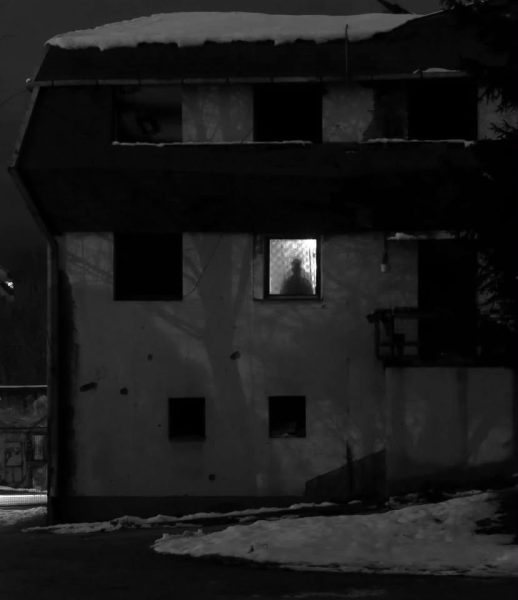
Tucked into a quiet street above Sarajevo’s Veliki park, the newly opened Sarajevski Spomenar doesn’t announce itself with grandeur. Its modest façade gives little away – until you step inside. This photo story explores how the museum, dedicated to the memory of children killed during the siege of Sarajevo, uses space itself as a form of storytelling. Instead of relying on didactic panels or linear timelines, the museum speaks through material choices, lighting, and flow. During my visit, I spoke with a French tourist unfamiliar with the war, whose reactions revealed how architecture alone can communicate absence, loss, and memory – without needing historical context.
To understand the thinking behind the design, I interviewed curator Elma Hodžić, received supporting materials from architect Samina Tanović, and was given background insight by graphic designer Bojan Hadžihalilović. Through photography, direct testimonies, and an analysis of spatial design, this story looks at how Sarajevski Spomenar offers a contemporary, emotionally resonant model for post-conflict commemoration – quiet, fragmented, and deeply human.
Before we walk in…
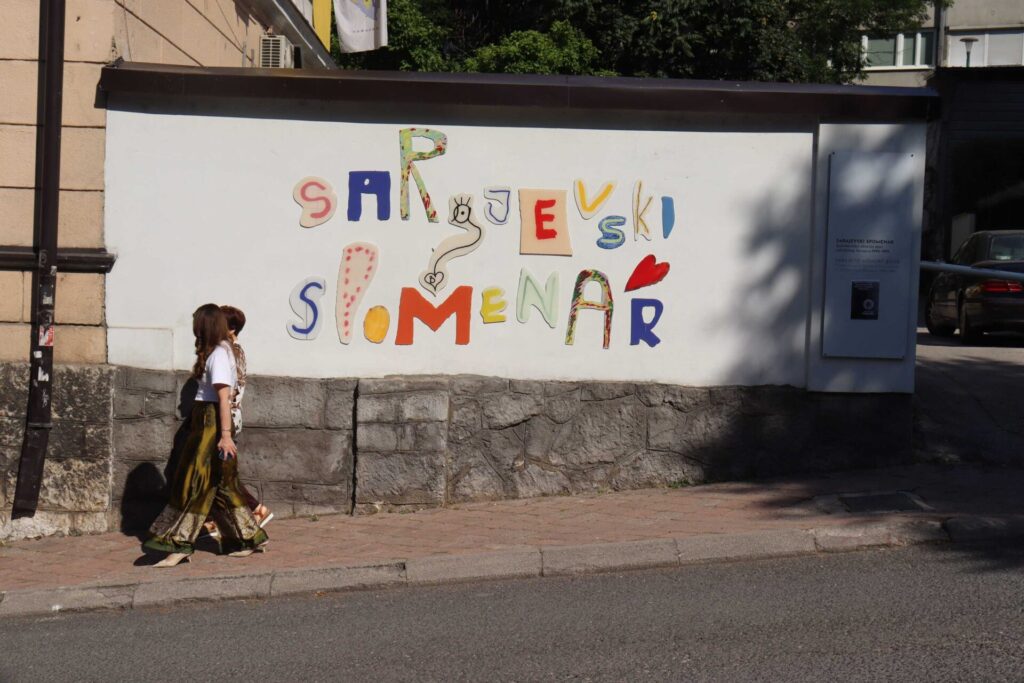
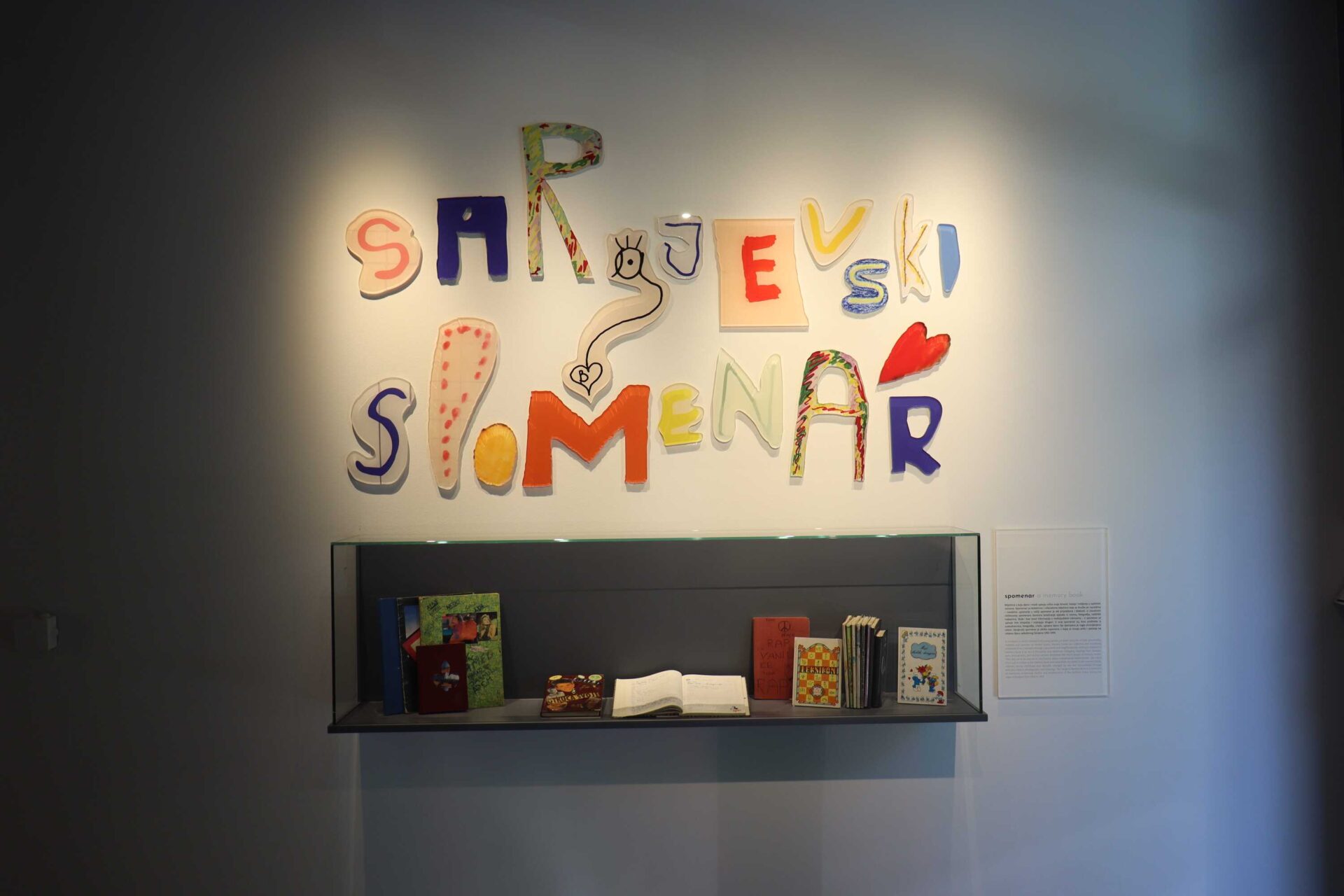
The entrance to Sarajevski Spomenar stops you in your tracks—not with the traditionalist, ornamental deign museums are famous for, but with raw, arresting simplicity. The whitewashed wall, unadorned except for the stone foundation that bears the weight of history, becomes a canvas for a title that is anything but ordinary.
Each letter of Sarajevski Spomenar is a fragment: stylized from the handwriting of children who were killed during the siege, assembled into a vibrant, mismatched collage. At first glance, the playful colors and varied shapes evoke a sense of innocence – until the truth of their origin sinks in, and the wall transforms into a silent memorial.
There’s no symmetry here, no polished uniformity; the letters scatter across the surface as if caught mid-flight, like voices interrupted. The entrance doesn’t just invite you inside – it asks you to bear witness, to step through a portal where design, memory, and loss are inseparable. In a city that wears its scars openly, this space stands as both a tribute and a reminder: beauty and sorrow often share the same wall.
Bojan Hadžihalilović on the significance of the location:

English version: “My connection with Sarajevo during the siege inevitably became entwined with this project. As someone who spent the entire war in the city and continued to engage with its reality through design—from Trio Design to posters, magazines, and even the ironic linguistic register of UNPROFOR—I felt a responsibility to ensure this space would not be merely a monument, but a living archive of emotion. This is not a spectacle of pain, but a quiet, thoughtful narration. That is why the location—Điđikovac 3—is so significant. The museum sits above the Memorial to the Killed Children of Sarajevo, and it cannot be physically separated from that line of memory. But unlike the monument in the park, which is open, exposed, static—the Spomenar invites you inside, offering silence, detail, story.
How it all begun – the process behind the design
The space that now houses Sarajevski Spomenar began as a standard room available for rent – unremarkable in form, with a less-then conventional floor plan and no immediate architectural features suggesting a museum. What made it significant was its location: Điđikovac 3, just above Sarajevo’s Veliki park and adjacent to the existing Memorial to the Murdered Children. This spatial relationship informed much of the design approach from the beginning.
Working with the space’s modest footprint, architect Samina Tanović and her team used the existing structure as a base, rethinking circulation and zoning to create an experience defined by pacing and contrast. Light and dark were introduced not only as visual elements, but as spatial cues – guiding the visitor through areas of quiet reflection and more open observation. Rather than transforming the space entirely, the design emphasized subtle intervention: reworking surfaces, inserting partitions, and layering meaning through material, texture, and flow. The result is a compact, carefully considered environment where design choices serve both narrative and spatial logic.
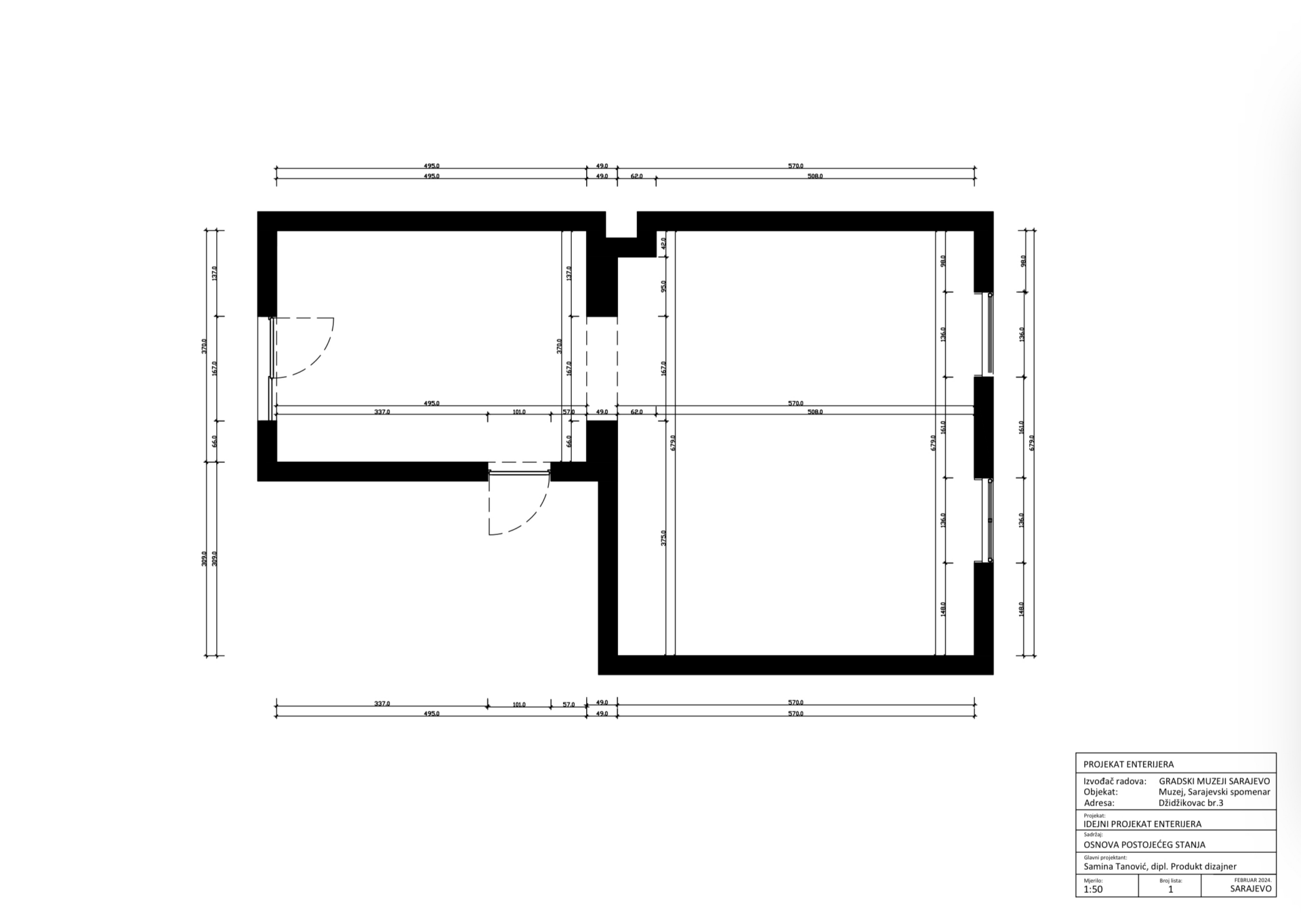
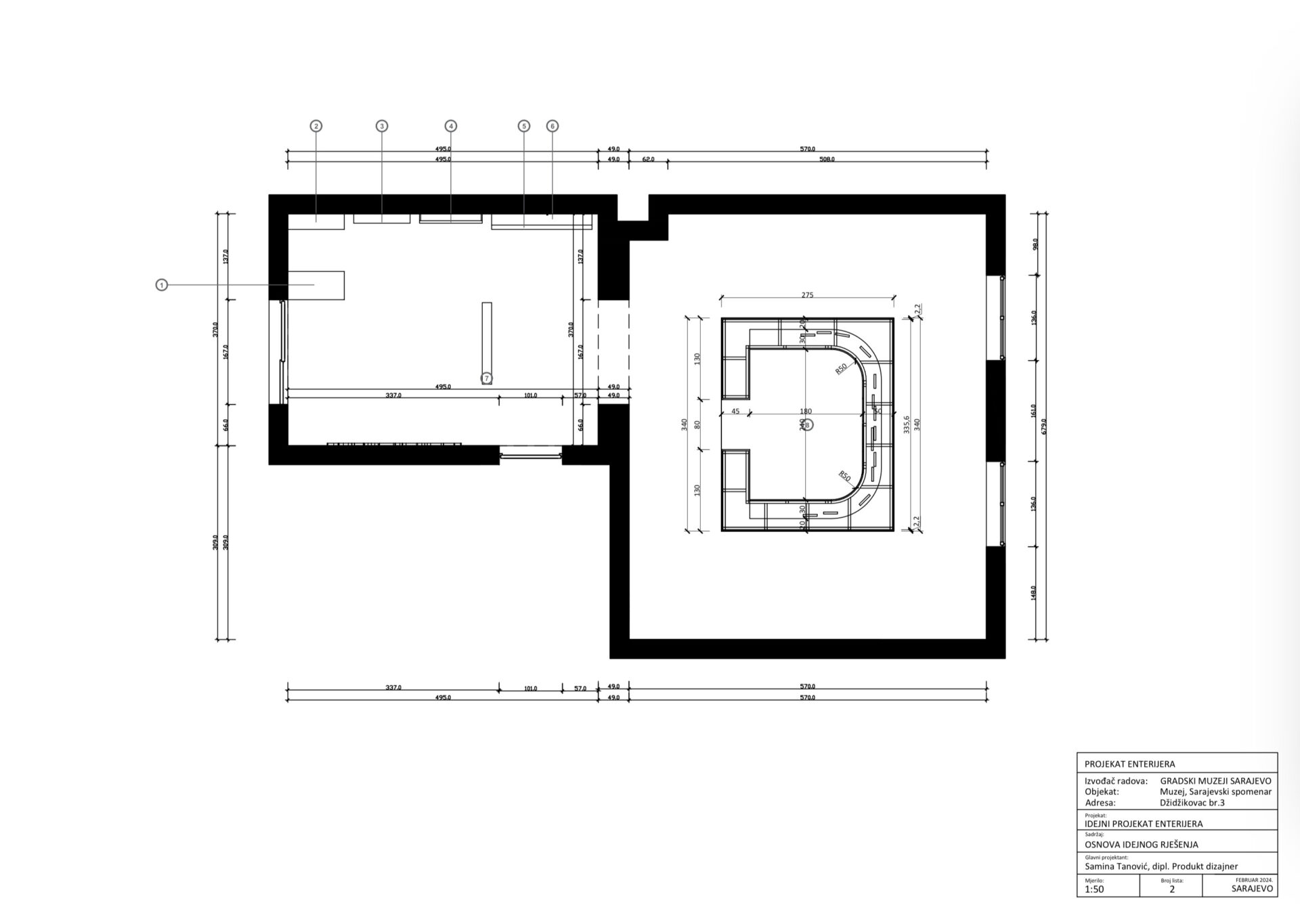
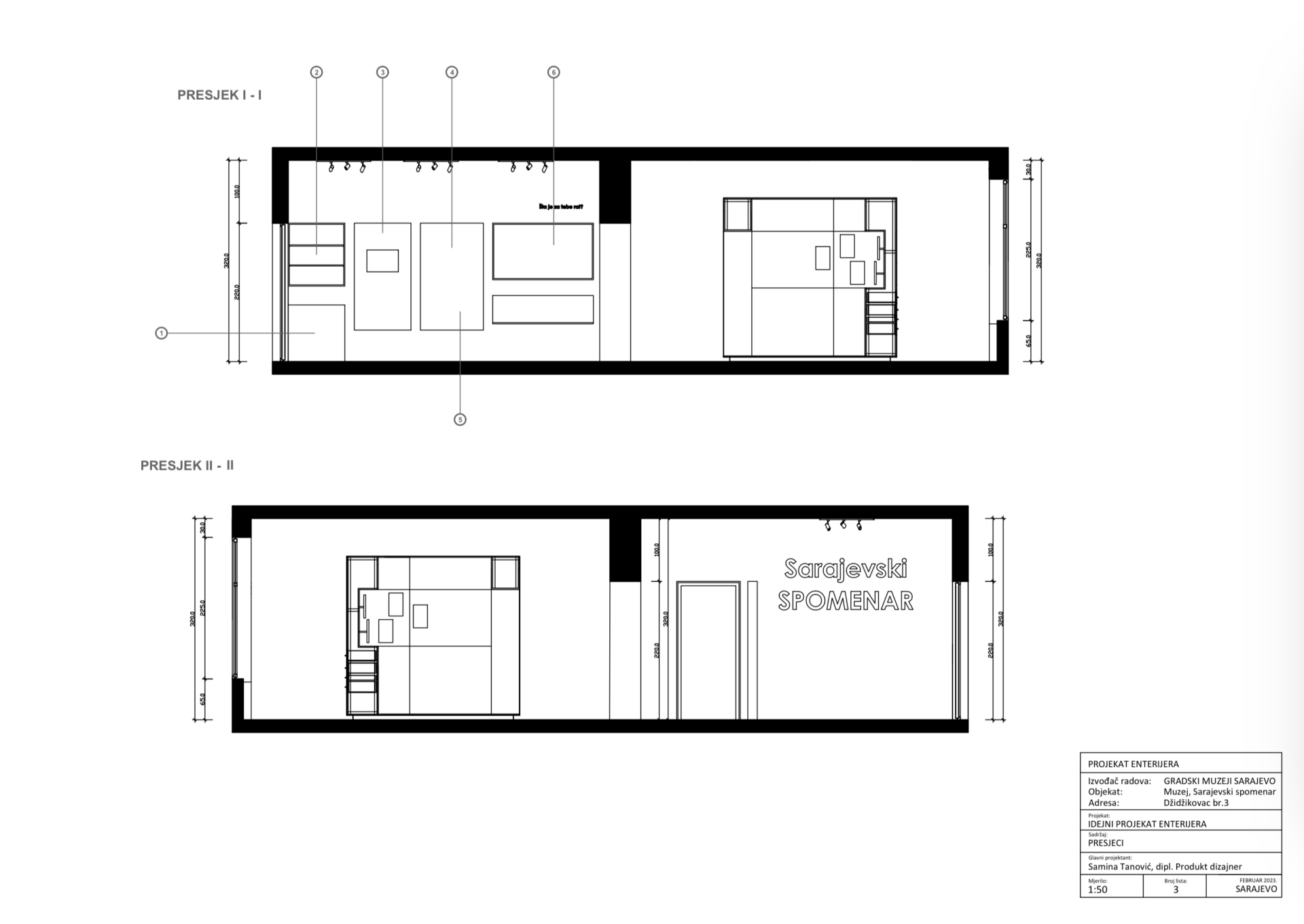
Arhitectural plans depicting the two rooms and their elements


Plain space before the design process
While the architectural layout defined how visitors would move through the space, the visual identity of Sarajevski Spomenar was shaped through a collaborative design process led by professor Bojan Hadžihalilović, a veteran graphic designer whose wartime work still defines Sarajevo’s visual culture. He worked closely with a group of students from the Academy of Fine Arts Sarajevo, bringing together decades of design experience and a fresh generational perspective. Rather than imposing a graphic style from above, the team approached the space as a visual surface to be built with care; through experimentation, dialogue, and direct engagement with the material they were representing.
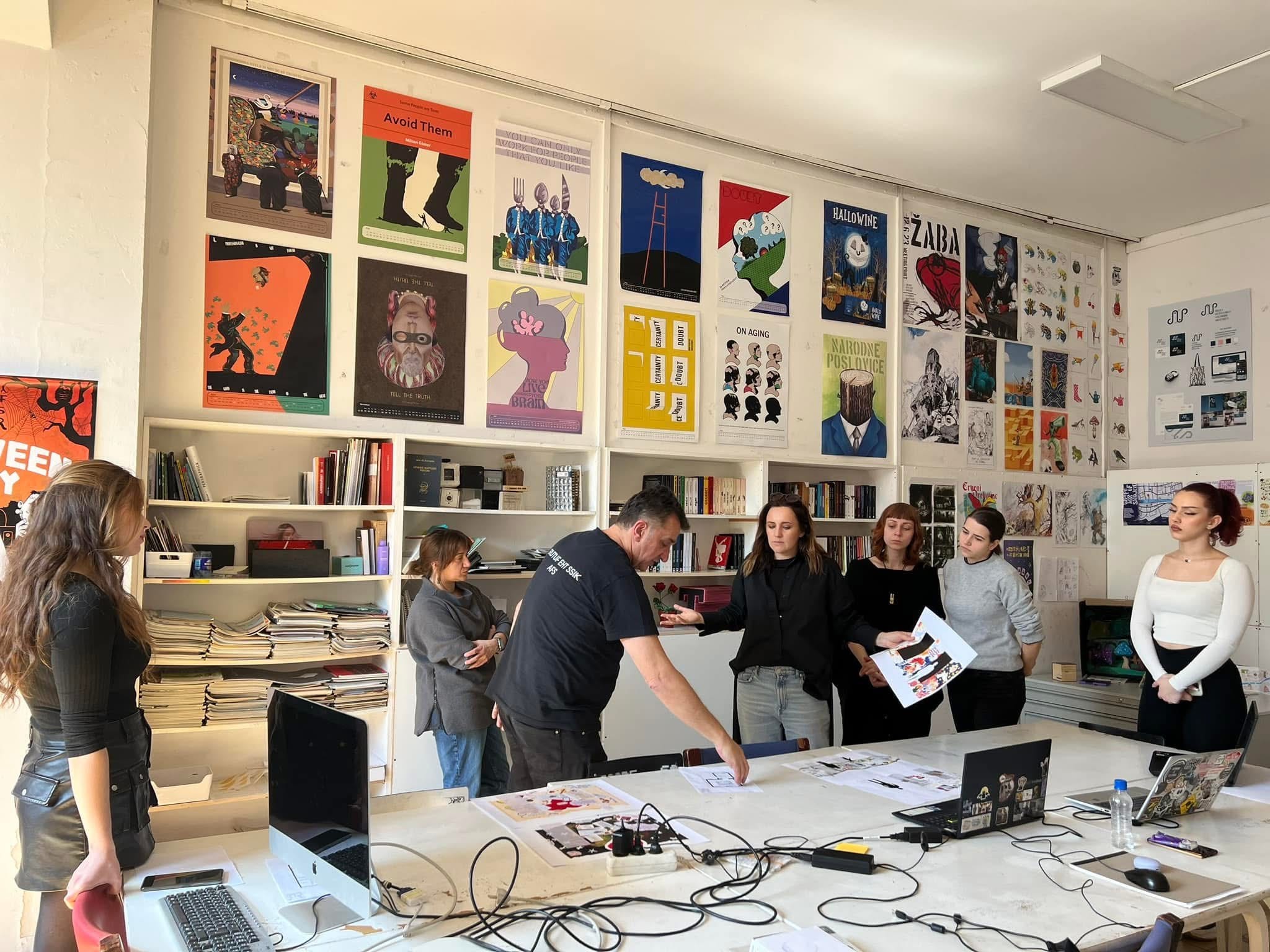

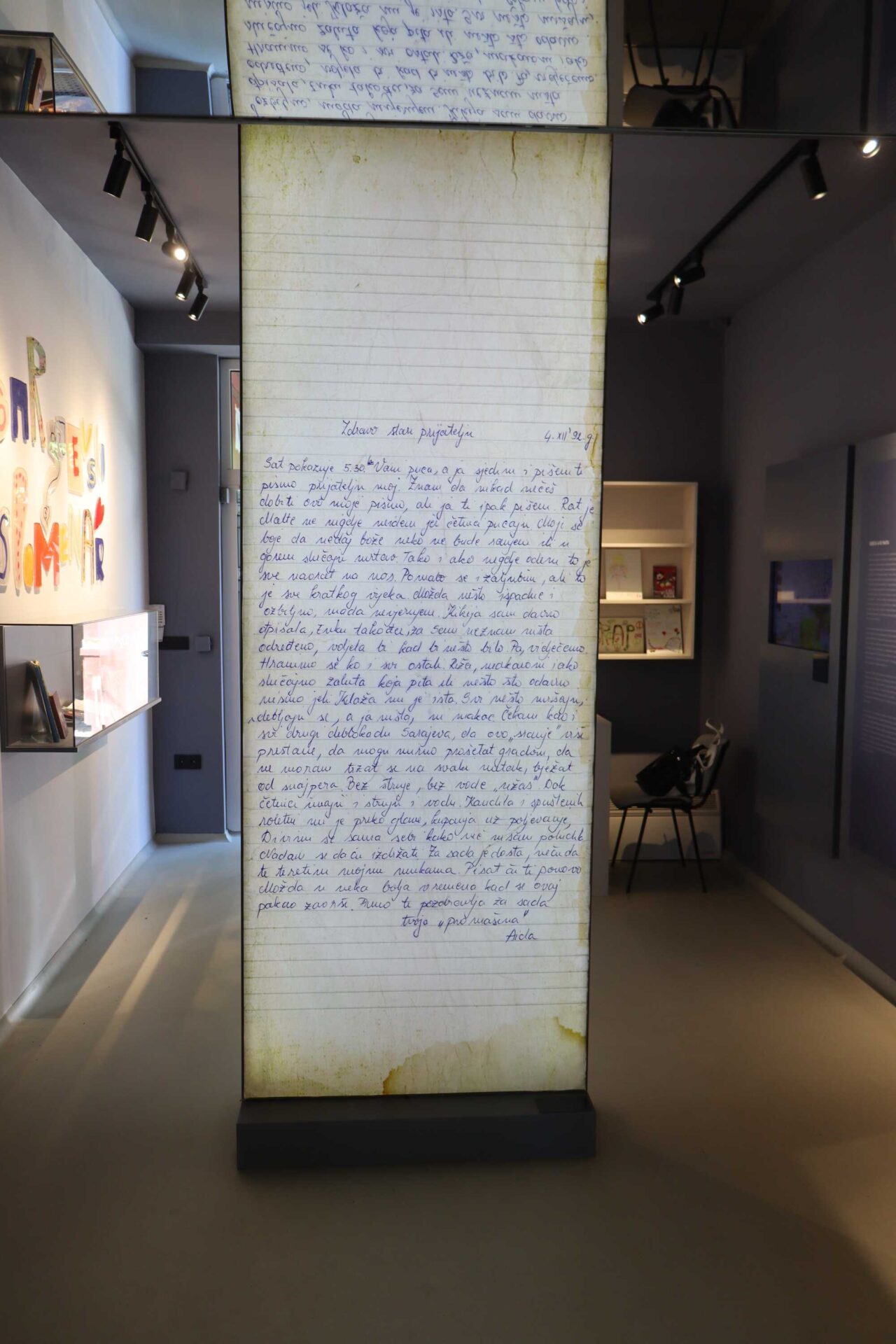
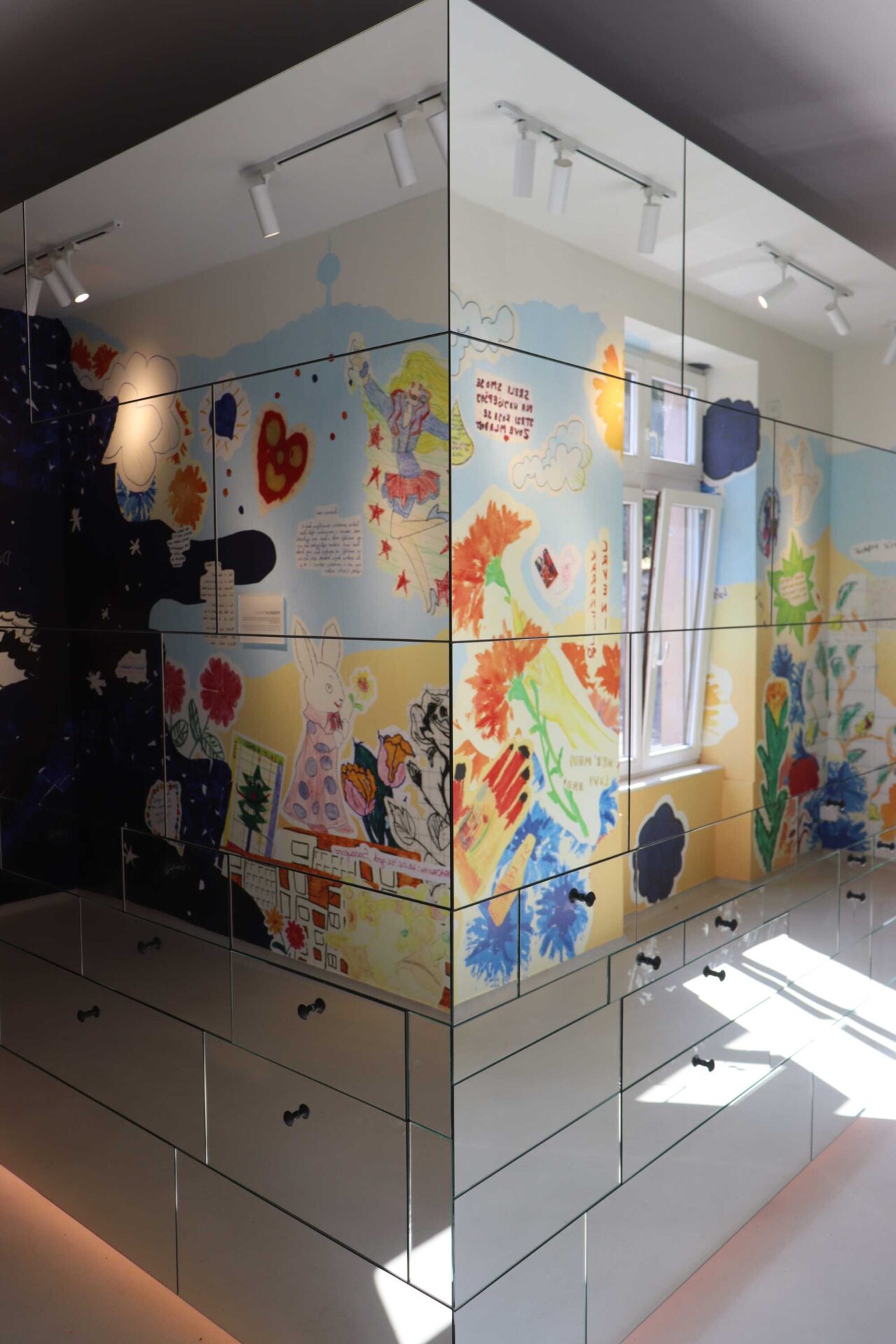
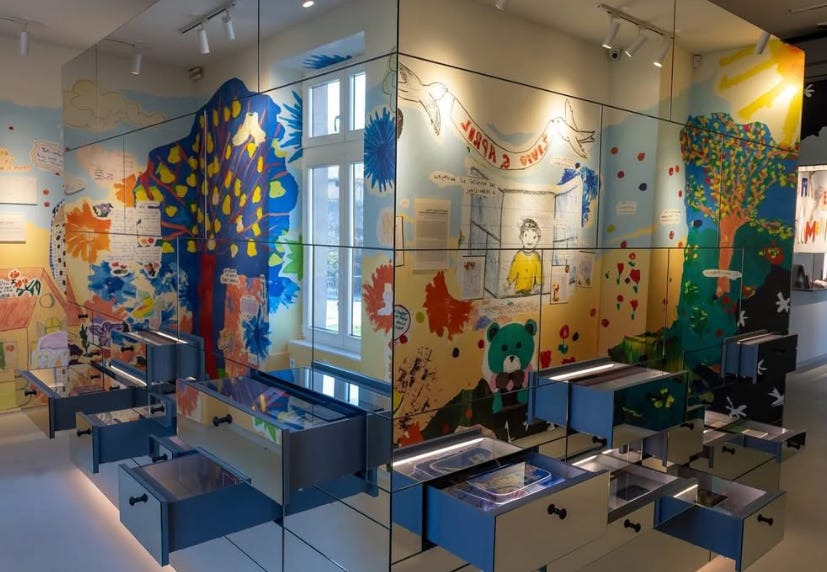
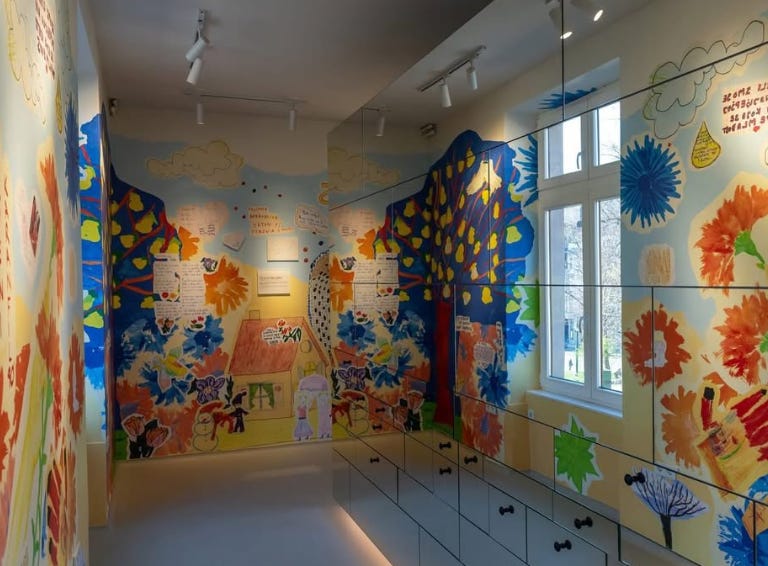
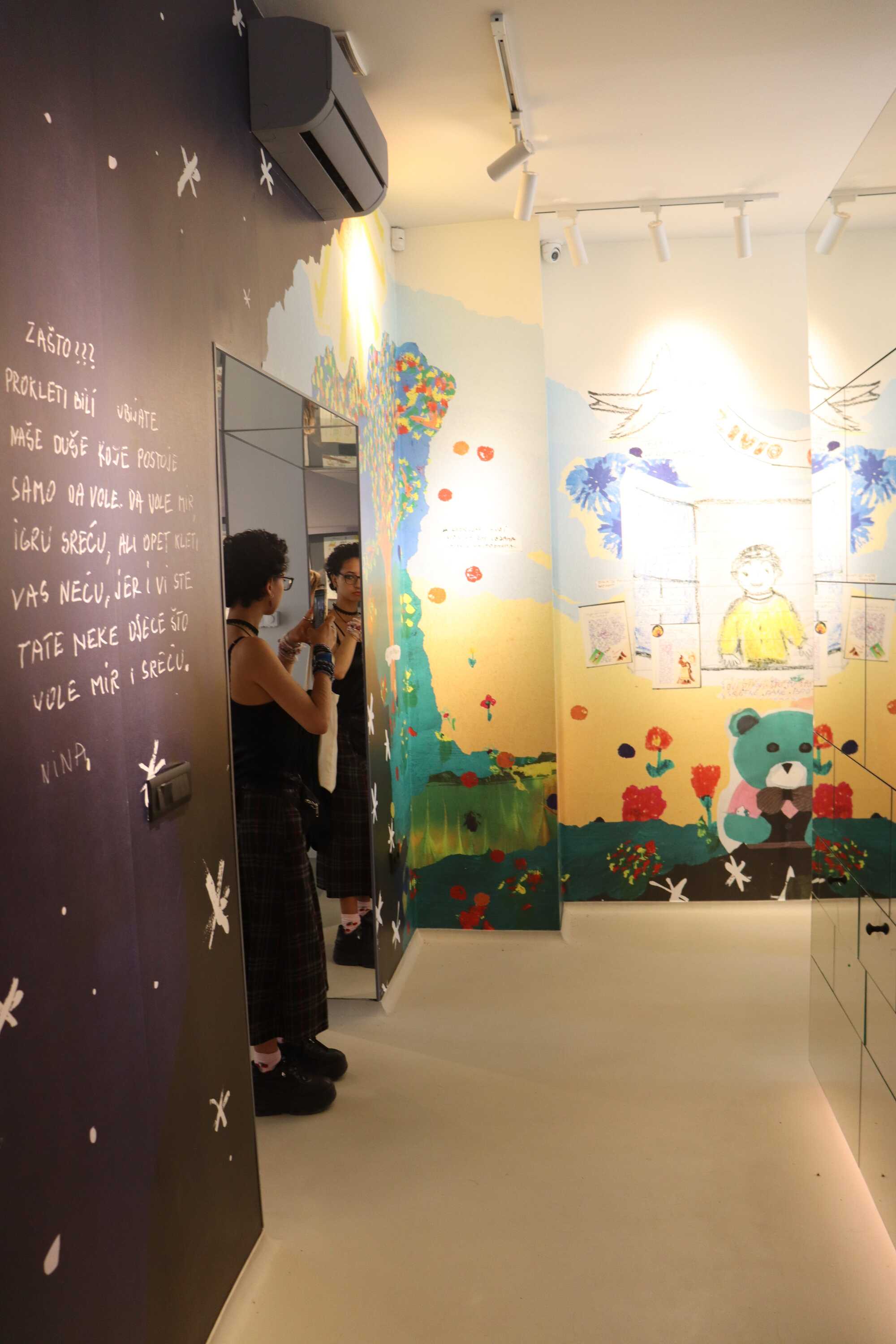
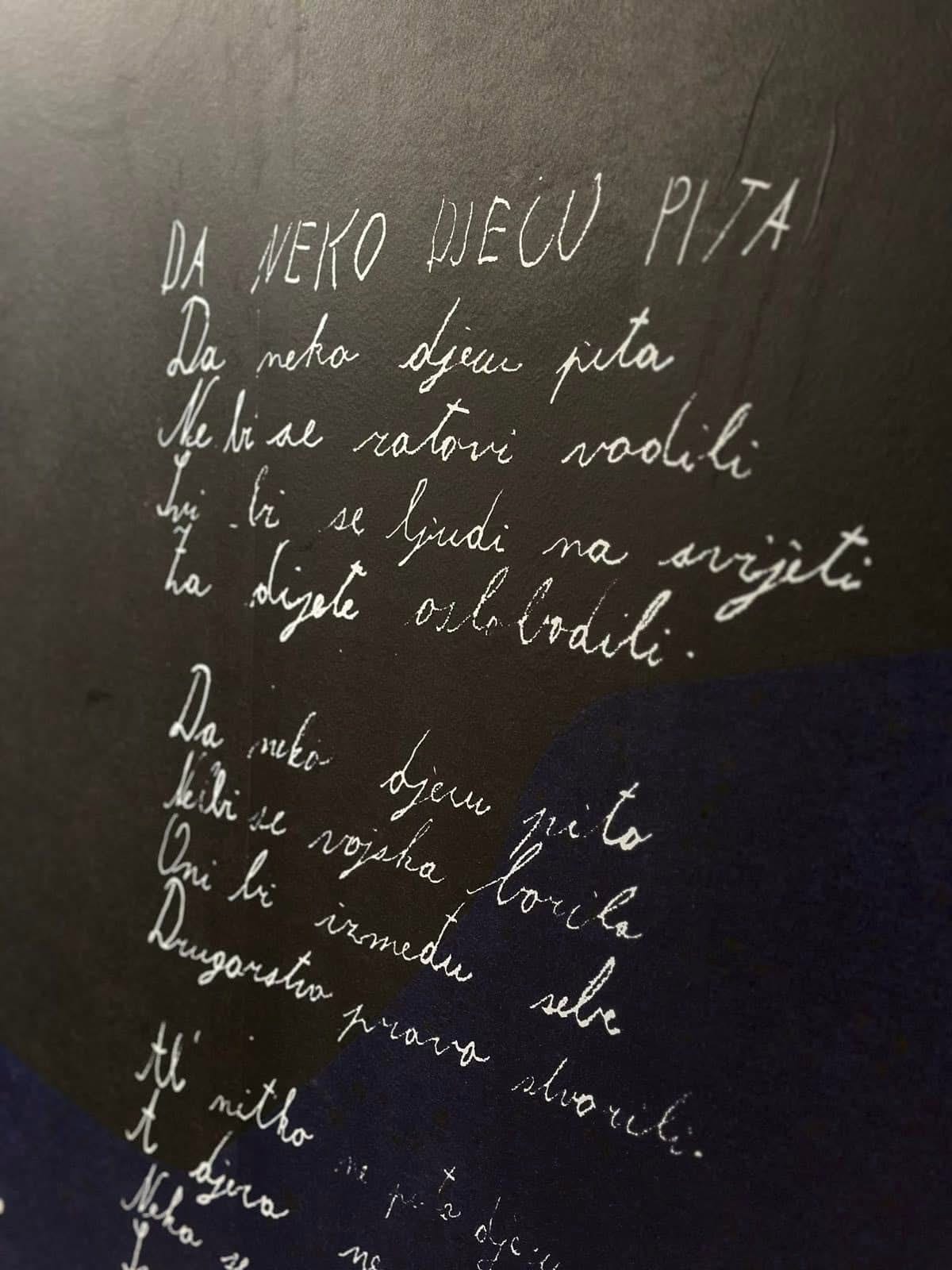
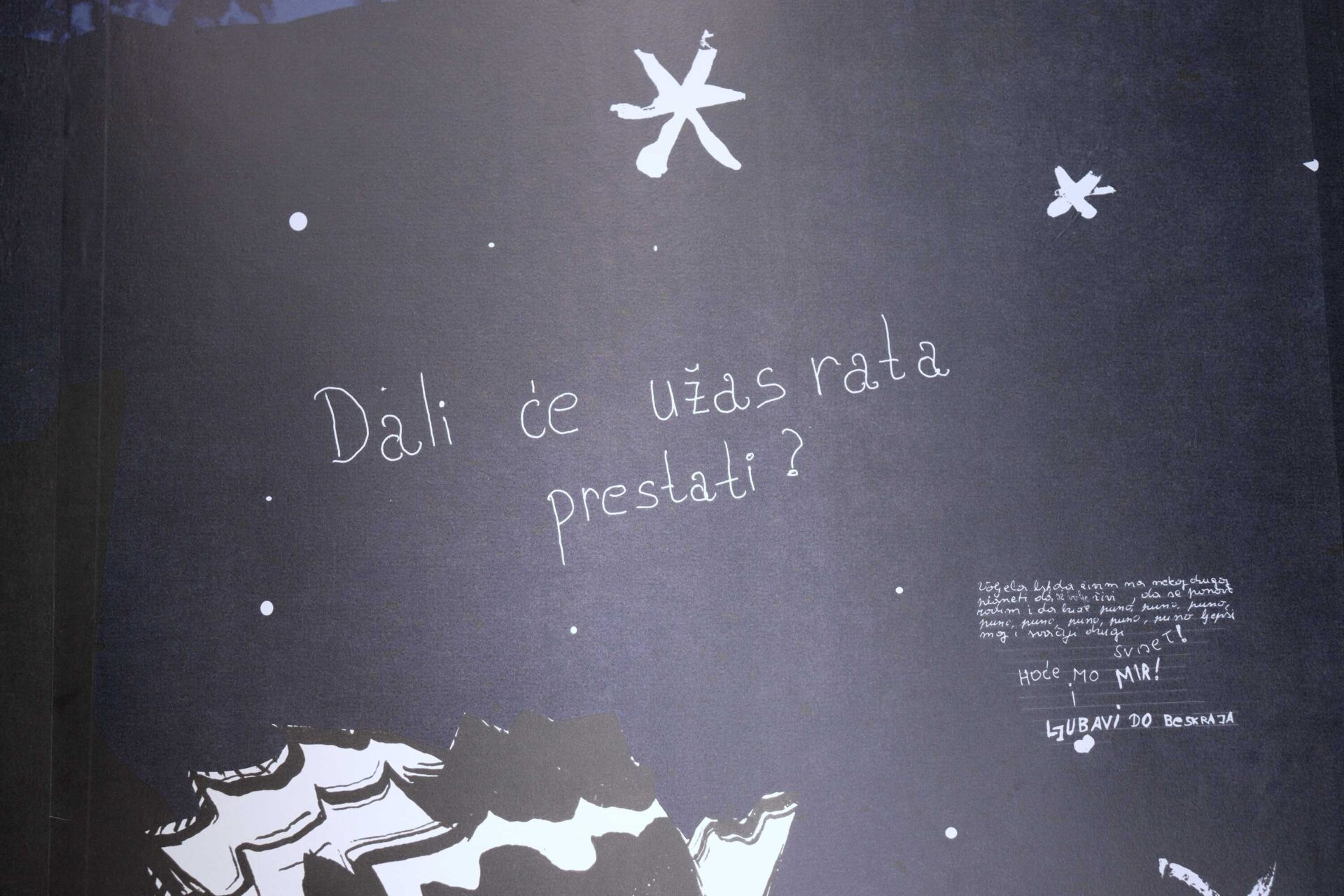
The most powerful design decision they made was also the simplest: to use the original drawings, writings, and diary fragments of the children themselves. These weren’t just reproduced in frames, they were scaled up, turned into large-format stencils, and arranged into immersive wall collages. The design doesn’t interpret the children’s voices; it gives them space to exist at scale, on their own terms. The result is both tactile and reverent; walls that feel alive with marks made in impossible conditions, now carefully repositioned in a space built to hold them. It’s a rare example of graphic design functioning not as decoration, but as memory architecture in its own right.


Projected designs of the walls; how the visuals influence space and movement
The front room

The main room
Elma on the contrast between the entrance and the main room layout and design:
Professor Bojan on the creative process behind the design:

English version: When they asked me to work on the visual identity, I knew it couldn’t be “design” in the traditional sense. I didn’t want it to feel like a museum, but more like a space that listens to you while you’re looking at it. That’s why I brought in students from the Academy – it was important to me that the process didn’t stay just between us “older ones,” but that young people bring in their own perspective, and also a sense of responsibility. And honestly, they nailed it.
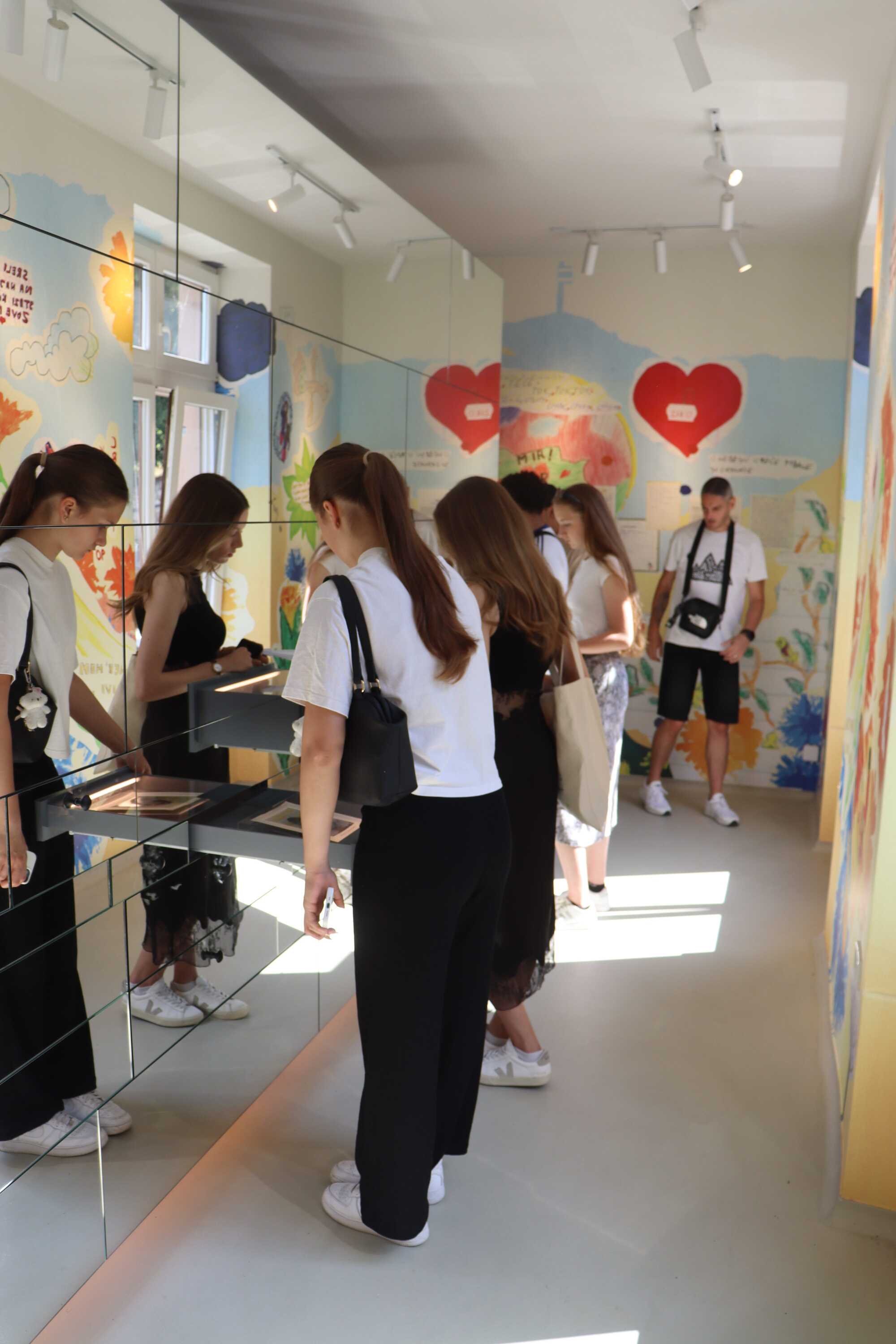
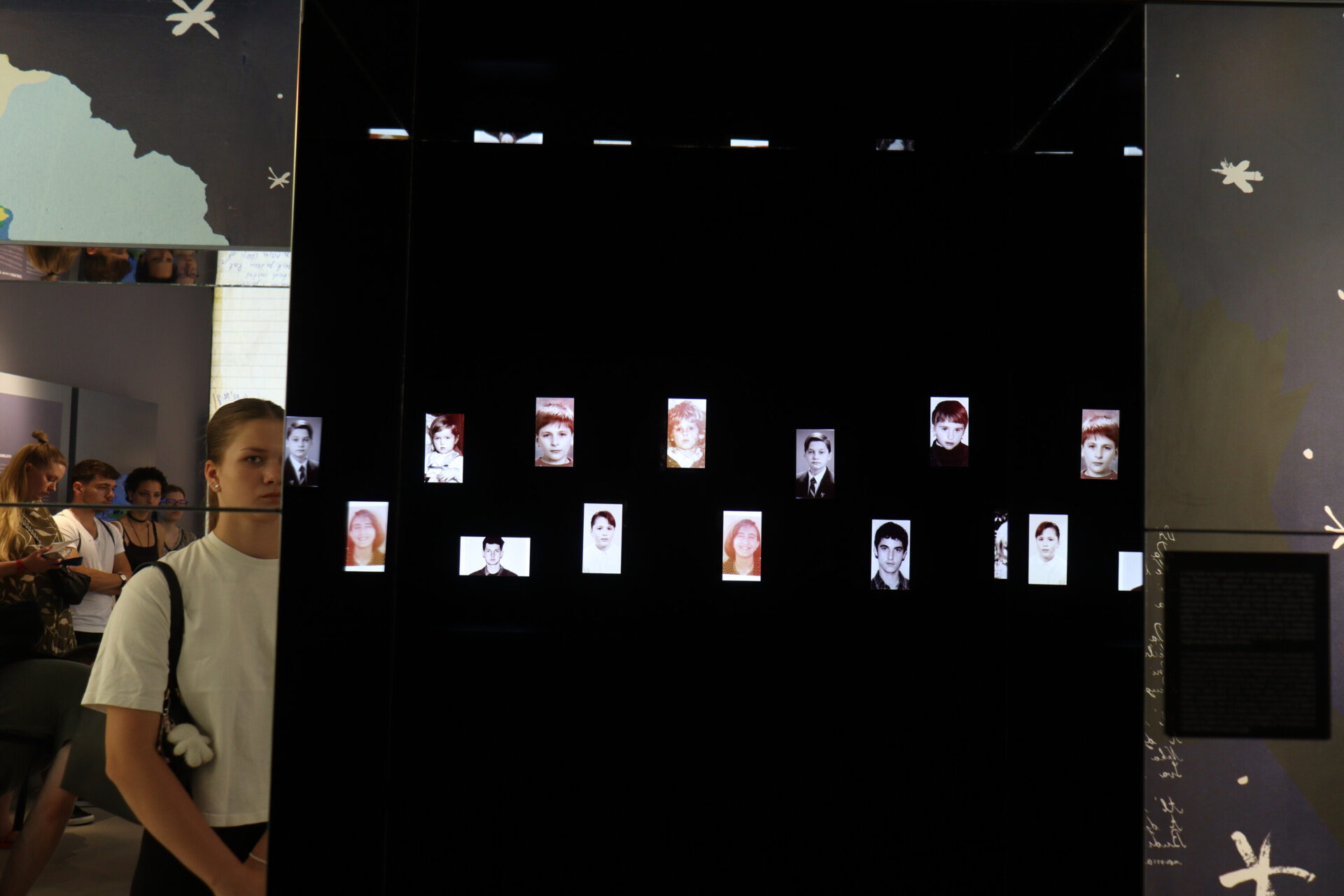
As for the space, the main room isn’t divided into light and dark by accident. The brighter side is filled with children’s drawings, diary pages, colors… Sometimes it looks like a classroom, sometimes like a bedroom someone left in a hurry. That side speaks of life. And then you walk into the darker part, where there’s silence, minimal light, and that black volume holding portraits of the children who were killed. In the background, you hear soft sounds of children playing, birds… It’s the only sound in the entire space. No drama, no manipulation – just atmosphere. Same goes for the mirrors and drawers. The mirrors aren’t there for reflection, but to fragment the space – the same way memory is fragmented, not chronological, but appearing as it chooses.
Inside Sarajevo’s Most Intimate Museum – A Tourist’s Perspective
What does it mean to design a space that remembers? In Sarajevo, the Sarajevski Spomenar redefines what a museum can be: it isn’t a grand building filled with display cases and rigid pathways, but a quiet, personal archive that trusts each visitor to find their own way. This is a place where architecture, interior design, and emotion converge. From the moment you step through its understated entrance, you’re drawn into an intimate atmosphere of soft lighting, hushed corners, and tactile encounters with memory. It’s a space that doesn’t dictate, but invites, and the experience is deeply individual.
To understand how the Spomenar communicates memory to someone visiting Sarajevo for the first time, I spoke with a french tourist who shared their impressions of this profoundly affecting museum:
1. What was your first impression as you entered the space? Did anything surprise you?
I wasn’t really sure what to expect, but it felt calm. Kind of quiet and intimate. The lighting was low, and nothing was flashy. At first it felt more like entering someone’s personal space than a traditional museum. That surprised me.
2. Did you feel like the museum was guiding you through a story, or did you have to find your own way through it?
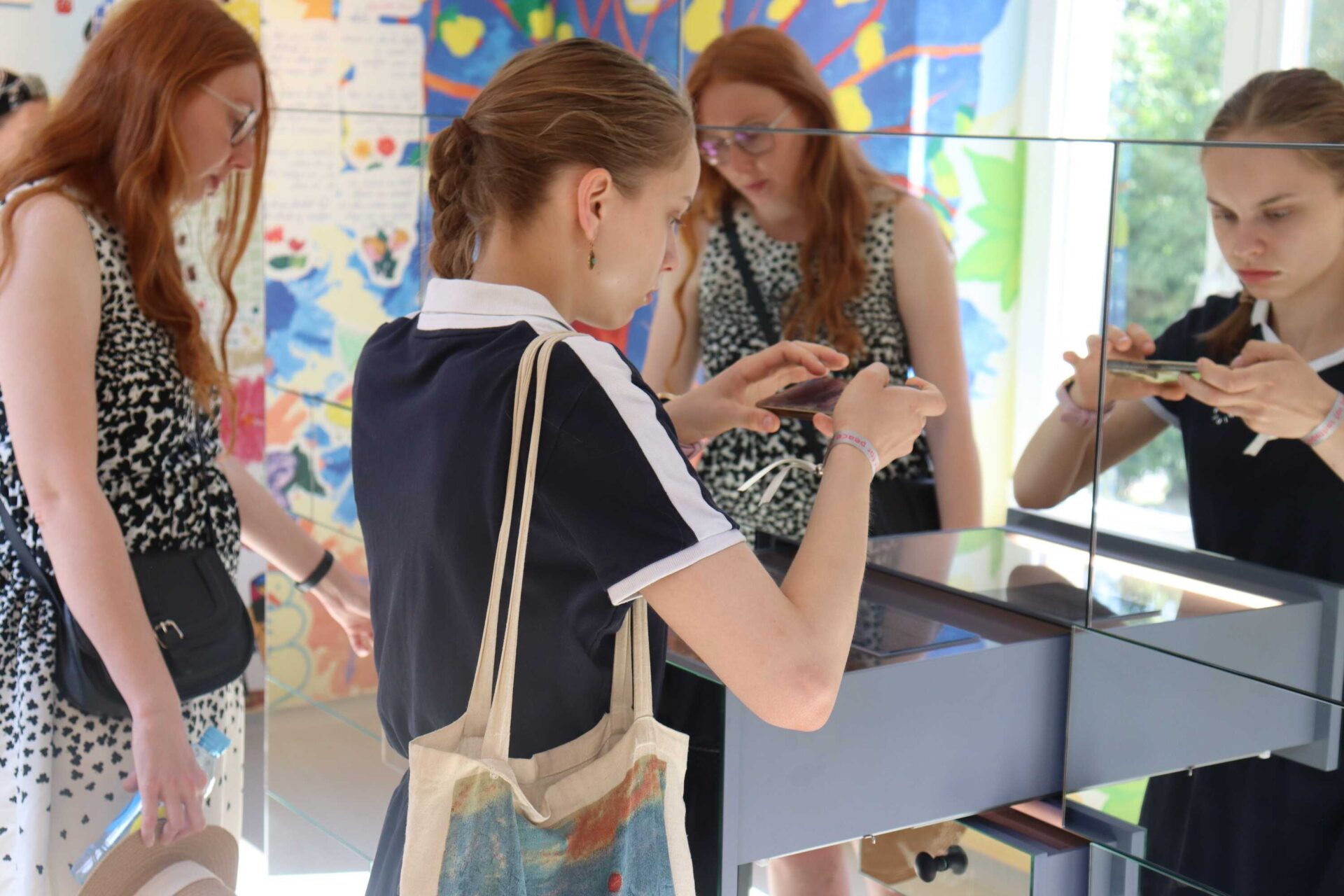
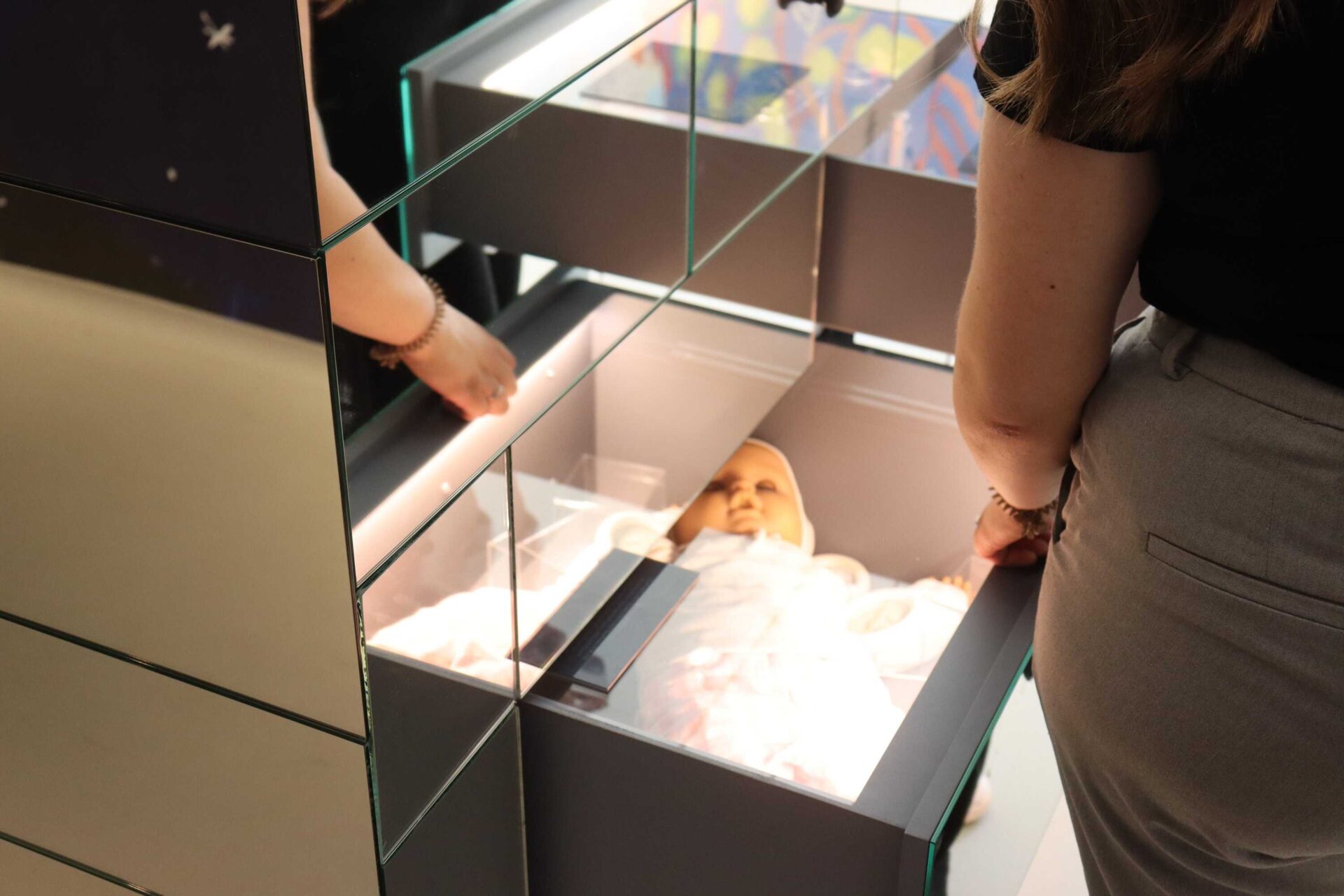
It’s not linear at all. There’s no set path or arrows telling you where to go, which I actually liked. You move through it at your own pace. Those glass drawers on the mirrored box – you open them yourself, and each one has a different story and object inside. It gives you this feeling that you’re discovering things on your own. Like the museum trusts you to take your time with it.
3. Was there a moment, material, or detail in the space that made you pause or feel something?
Yes, there’s this black glass box in the centre of the room. When you step in, it’s really dark, and the walls are glowing with photos of kids who were killed. And in the background, you can hear children playing and birds. It’s very soft, but it gets to you. It’s simple, but emotional. I stood there for a while, it kind of catches you off guard.
4. Do you think this space communicates memory even to someone who hasn’t lived through the war?
Yes, absolutely. I don’t know much about the war, and it’s my first time here. But the space makes you feel things, not because it tells you what to think, but because of how it’s built. You don’t need to know the history in detail to feel the weight of it.
What struck me most in this conversation was how the visitor, with no personal connection to the war, still felt the space speaking directly to them. It’s fascinating how both the stories preserved here and the design of the museum itself transcend cultural and historical divides. The architecture doesn’t just hold memory; it creates an experience of shared humanity, reminding me that spaces like this can carry emotions and meaning far beyond the context in which they were born.

Final word
In a city still marked by visible wounds, Sarajevski Spomenar offers something rare: a space where memory is not instructed, but invited – where design becomes a language of grief, tenderness, and quiet resistance. It does not attempt to explain the war, but instead makes room for its traces to be felt, piece by piece, wall by wall.
This story would not have been possible without the generous insight and collaboration of curator Elma Hodžić, architect Samina Tanović, and designer Bojan Hadžihalilović, who shared their time, perspectives, and materials to bring it into focus.