In the DJ booth, Denial Ramić, known as DJ DENRO, puts on his headphones and spins the next track in a crowded underground venue. Meanwhile across town, the rock band Srklet is rehearsing in a cramped practice room, their chords raw, their lyrics louder than the page can hold. And in a quiet corner of Skenderija, inside the Ex-Yu Rock Center, Will Richard carefully places a concert poster of rock singer Rambo Amadeus from 1992 on display.
Each of them is doing something different. But all are doing the same thing: progressing the sound of Sarajevo.
Sarajevo’s soundtrack sounds like a protest with no chorus – a song that loops, echoes, and refuses to fade. Between 1992 and 1995, during the siege of Sarajevo, the city was surrounded by enemy forces, its residents living under constant bombardment and sniper fire. Yet even then, in the darkest days, musicians played. In candlelit basements, they performed for small, silent crowds. On battery-powered radios, they broadcast not just songs, but a signal of survival. Music became a lifeline—an act of resistance, a way to push back against fear and isolation.
The war ended nearly three decades ago. But that sound of defiance didn’t vanish. It evolved. And today, a new generation of musicians is stepping into its echo.
The Music That Played On Through War
The history and testimonies from those who lived through the Sarajevo siege show that musicians didn’t wait for peace; they created sound in the middle of crisis, transforming improvised shelters, basements, and airwaves into spaces of connection and resistance. Radio stations like BH Radio 1 and Radio ZID operated despite the shelling, broadcasting music, news, and messages from family members separated by frontlines. Rock concerts happened in shelters. Punk bands screamed their lungs out under shellfire.
Despite the siege and unimaginable conditions, a few musicians from outside the country managed to enter the city to perform, often risking their lives to do so. The documentary “Scream for Me Sarajevo“ follows Iron Maiden’s Bruce Dickinson, who performed in 1994 amid snipers and rubble. “Kiss the Future“ and “Pamti Moju Pjesmu“ echo similar truths: when everything else collapsed, music gave people something to live for, or at least something to feel.
But that era wasn’t just defined by rock stars. It was teenagers, students, and underground fanatics who kept culture alive through mixtapes, late-night gatherings, and fearless improvisation. The siege-era soundscape was less about genre and more about defiance.
The Musical Spirit Inherited
For a new generation of Sarajevo musicians, the sounds of the past are more than stories, they’re a legacy to be lived, reinterpreted, and carried forward.
DJ DENRO was raised in a musical household, surrounded by sound before he chose it as a path. His father worked in radio and passed him USBs filled with early EDM – electronic dance music that pulses with energy and rhythm.But those tracks were always accompanied by stories, stories about music under siege, how it played even when the lights went out, and how DJs spun tracks in bombed-out basements to make people feel alive.
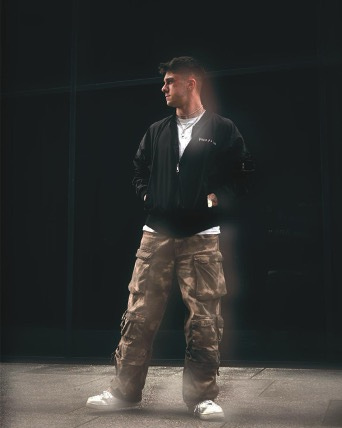

“I wasn’t born during the war, but I’ve heard the stories,” DENRO explains. “Music was everything. Even electronic music, something people think of as just party stuff, can carry that emotional weight. It helps people survive, mentally and spiritually.”
While his generation doesn’t face the same threats, he believes the emotional landscape still demands resistance. Maybe it’s not bullets and bombs anymore, as he reflects, but apathy and sense of stillness and of nothing changing; and music still fights that.
To DENRO, electronic music isn’t just a club soundtrack, it’s a community and t’s release. And like the wartime soundscape before it, it doesn’t ask permission to be heard. There’s scarcity: of venues, opportunities, and resources. But DENRO sees music as both protest and connection.
“It’s still resistance. Against boredom. Against feeling invisible. Music is always resistance.”
– DENRO
For Andrej Rudan, frontman of the Sarajevo band Srklet, the influence of wartime music was never abstract. He grew up among the people who had survived it, and kept playing through it. That sense of urgency still resonates.
Today, Srklet channels that emotional legacy not through protest anthems or overt messaging, but through something more primal. “Our music is driven by love. Sometimes it’s joyful, sometimes it’s chaotic. But it’s always honest,” Rudan says. “That’s the spirit we inherited.”
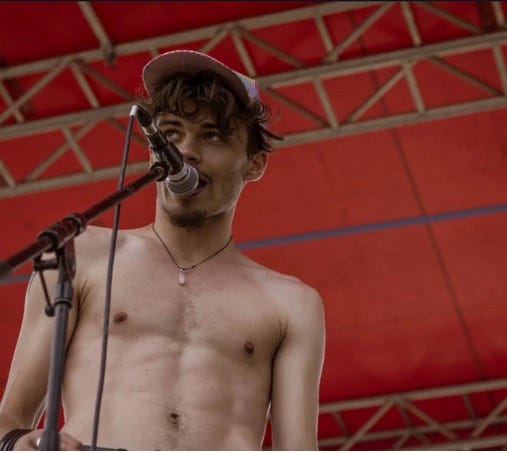
The band’s biggest inspiration is Skroz, a Sarajevo punk rock group formed in 1996 whose sound blends rock with deep lyrical introspection. For Srklet, Skroz isn’t just a musical reference. They represent attitude, spirit, and continuity, evidence that something survived and kept evolving.
Rudan acknowledges a sense of responsibility to preserve something. But he’s not burdened by it. He and his bandmates see themselves as a continuation, not an imitation, and that they probably just differ in ways they express it. And while he jokes that the emotion he hopes listeners feel is love, and even “srklet“ – that untranslatable fire in the chest, a kind of restless energy that refuses to settle; it’s clear that what drives him isn’t just music. It’s memory.

“This isn’t nostalgia. It’s recognition.” – Will Richard
Walk into the Ex-Yu Rock Center today and you’ll find shelves lined with vinyl, rare concert posters, and guitars that once echoed through wartime basements. But this is no dusty museum.
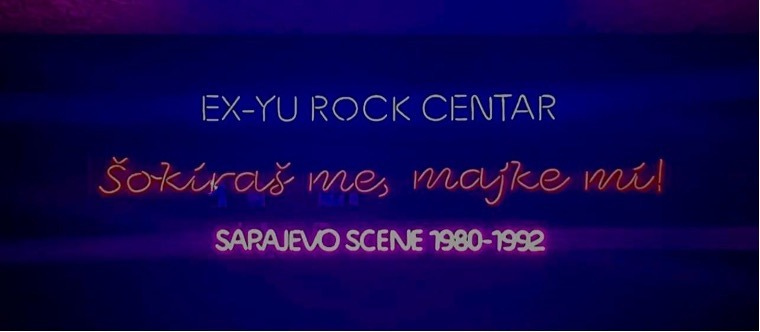
When its founder Will Richard first arrived in Bosnia and Herzegovina in 2005, he had never heard of Bijelo Dugme, Indexi, or any of the other iconic bands that shaped the sound of Yugoslav rock. Originally from the USA, he came as a student on a short visit, one that would turn into him staying for 15 years in Sarajevo and set the stage for a long-lasting connection with the region’s music and people. Though not a musician himself, he grew up in a home where music mattered, his father ran a record store for over 40 years.
What began as a fascination with the ex-Yugoslav scene turned into a mission: to preserve a culture that felt both extraordinary and under-celebrated. Upon his move, what he discovered was staggering: thousands of bands, some legendary and others forgotten, that had shaped a generation across the former Yugoslavia. Sarajevo, in particular, had a pulse unlike anywhere else, long before the war began. The city was home to some of Yugoslavia’s most influential rock acts, and that legacy of bold, expressive music carried straight into the wartime years.Today, the Ex-Yu Rock Center honors that continuity. Alongside albums and artifacts from the pre-war rock explosion, the museum also features wartime music and the stories behind it, bridging two eras of resistance through sound.
“This isn’t nostalgia,” Richard says. “It’s recognition. The music from that time wasn’t just good – it was urgent. And that urgency doesn’t go away.”
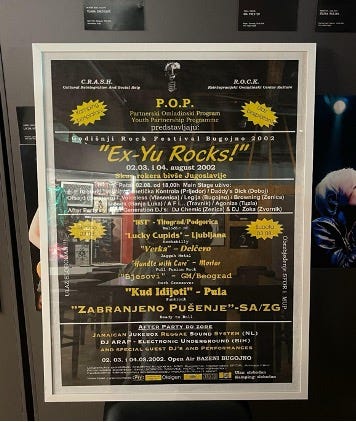
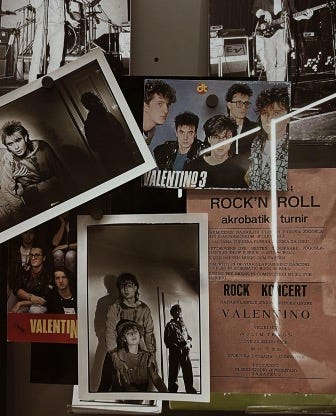
Posters and images of Ex-Yu rock bands and events displayed in the Ex-Yu Rock centre
(Photos by: Ajla Bukva)
Since 2022, the Rock Center has hosted exhibitions, community events, and their own Open Amp Nights, where teenagers and young adults plug into a stage surrounded by relics of the past. The drums are set, the amps are live. All that’s missing are people willing to play, and many do. Spontaneously and fearlessly.
For Richard, that’s the point: not to archive resistance, but to reactivate it.
“People here think of music from that era as ‘the past.’ But what those bands stood for – resistance, community, critique – that’s still relevant,” Richard states. “And we’re seeing young musicians pick that up, even if they don’t frame it the same way.”
The museum now serves as both archive and incubator. But more importantly, it gives young artists a sense of continuity, one that will always matter.
“We want to show that music, then and now, is one of the most honest ways Sarajevo speaks.”, as Richard says.
Between the Echo and the Pulse
According to the musicians and cultural institution workers such as Richard, what the city needs today isn’t more monuments, it’s more amplifiers. More rehearsal rooms. More spaces where music can grow, not just be remembered. Will Richard points out that while the city once had over 20 venues, many are now gone, and without space to play, live acts risk disappearing. DENRO echoes the concern, emphasizing that the local scene needs infrastructure, not just nostalgia.
What young artists like DENRO, Rudan, and many others are doing isn’t about nostalgia, it’s about contribution. They are adding their own voices to Sarajevo’s layered soundscape, building on the legacy rather than simply preserving it. Through bands, DJ collectives, community events like the Open Amp nights, a new generation is finding ways to play, experiment, and create.
Sarajevo has changed, but its pulse never faded. The wartime legacy doesn’t sit untouched; it’s being reimagined and transformed into energy that moves through samples, lyrics, and live sets.
And now, in underground clubs, in practice rooms, on borrowed stages and broken floors, it begins again. Not in imitation, but in instinct. Not in memory, but in motion.
The war wrote its verse. Now, the next generation is writing the refrain.

