In Bosnia and Herzegovina, the fight for free expression is no longer confined to the streets; it’s fought pixel by pixel on social media platforms. As political forces tighten their grip on public discourse and crack down on protests, young activists are adapting, turning to digital tools to raise their voices and challenge the status quo.
This new form of protest marks a critical evolution in how dissent survives and thrives in a shrinking public sphere. Youth activism in BiH has long oscillated between apathy and intense, hyper-localized engagement, but it is undergoing progressive change. The online visibility that activism offers is invaluable, especially as many campaigners trust digital sources far more than traditional media. Yet despite this growing online presence, freedom of expression in BiH continues to erode, with proposed legal changes threatening to make online discourse even riskier.
Criminalizing Dissent
Proposed legislative changes in Republika Srpska (RS) and some cantons starkly illustrate these dangers. In 2023, the Parliament in Republika Srpska passed a law re-criminalizing defamation, introducing severe fines even up to €61,000 and the possibility of imprisonment. The move was widely condemned by international organizations, including the OSCE, PEN International, Transparency International, Human Rights Watch, and the EU Delegation, all warning of its chilling effect on free speech and its potential to silence critical voices online.
In Una-Sana Canton, as of early 2025, a government-appointed Working Group is drafting a new “Law on Information” intended to regulate the media space, limit so-called “hate speech” and “fake news.” If adopted in its proposed form, the law could empower the Ministry of Internal Affairs to impose fines on media outlets and even ban websites or individual accounts. The precise status of this legislative proposal remains unclear.
Similarly, in Sarajevo Canton, a “Draft Law on Public Order and Peace” was introduced in May 2023, aiming to give police and courts the authority to punish “purveyors of fake news” online through fines. Critics, including the Centre for Investigative Reporting (CIN), warned that such measures could be repressive and lack clear, transparent mechanisms for verifying truthfulness. Here too, the fate of the draft remains uncertain.
These legislative efforts, often vaguely worded and open to broad interpretation, create an environment in which online expression, while seemingly free, becomes increasingly vulnerable to surveillance, censorship, and legal repercussions.
Digital Resistance and Creativity
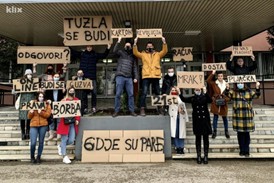
Young activists in BiH have demonstrated remarkable creativity in leveraging social media to organize, inform, and mobilize. One example is “Karton revolucija” (Cardboard Revolution), an environmental movement initiated by several young activists from Bosnia and Herzegovina. They have effectively used online platforms, including TikTok and Instagram, to raise awareness about illegal logging and environmental threats. Their use of memes, short videos, and visually engaging content shows a sophisticated understanding of how to engage younger audiences and build momentum online.

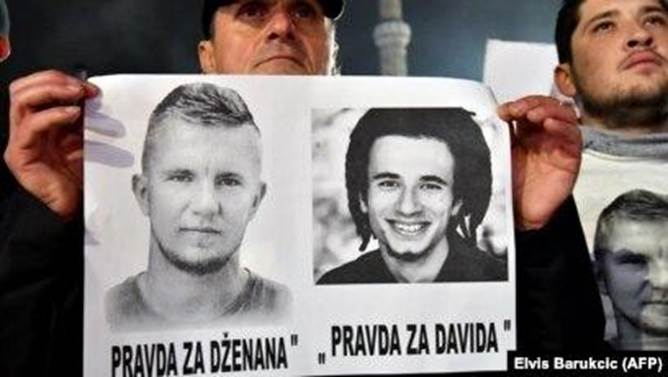
Another powerful example is “Justice for David” and “Justice for Dženan”, grassroots movements demanding accountability for the deaths of David Dragičević in Banja Luka and Dženan Memić in Sarajevo, both of whom died under unresolved and controversial circumstances. These campaigns extensively used Facebook groups, hashtags, and livestreams to organize daily protests, share real-time updates, and mobilize thousands of supporters. Their use of social media was crucial not only for bypassing traditional media but for building public pressure, uniting people from across the country, and transforming personal tragedies into nationwide demands for justice.
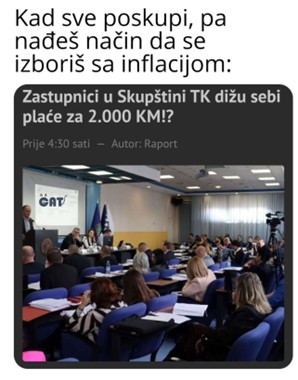
BiH youth employ a variety of digital tools and creative strategies to amplify their voices and mitigate risks. Humor and memes are powerful tools, enabling activists to convey complex political messages in an accessible, often satirical manner that can reduce perceived risk and increase shareability. Livestreaming on platforms like Facebook is invaluable for real-time protest coverage, bypassing traditional media gatekeepers and allowing raw, unfiltered events to reach a wide audience instantly. Videos and artwork are also key to developing civic identities online.

Strategies for Safety
Young activists are often aware of the need for anonymity to protect themselves from potential repercussions. This can involve using anonymous pages or accounts, or employing VPNs (Virtual Private Networks) to mask their IP addresses and bypass potential censorship or surveillance. For sensitive organizing and communication, activists often rely on encrypted messaging apps like Signal or Telegram, which offer end-to-end encryption, ensuring privacy and security of conversations. Under pressure or censorship, activists demonstrate resilience by quickly adapting their strategies. This could involve transitioning to new platforms, using coded language, or relying more heavily on private groups for sensitive discussions, thereby maintaining a constant digital “cat-and-mouse” game with authorities. Like in many other countries all over the world, journalists and activists in Bosnia and Herzegovina have increasingly utilized VPNs and encrypted messaging apps, such as Signal and Telegram, to evade surveillance and censorship.
Risks and Limits of Digital Activism
While social media offers unprecedented opportunities, it also presents significant challenges and dangers for young activists in BiH, so it is a double-edged sword. Activists also face SLAPP (Strategic Lawsuits Against Public Participation) lawsuits, where powerful entities sue activists to silence them, as seen with young environmental activists facing legal action for their campaigns against hydropower plants.
Concerns about mass biometric video surveillance in public spaces highlight the risk of state monitoring and political control. Digital activists often face online harassment, including doxing (publishing private information), cyberstalking, and coordinated hate campaigns that can cause serious psychological distress. Social media platforms themselves introduce further complications. Content about sensitive but factually documented topics like the Srebrenica genocide, has at times been removed or flagged for violating “community standards.” Such algorithmic moderation can inadvertently suppress legitimate voices or limit their reach without appreciating the local context.
The fear of being sued, spied upon, or harassed can lead to self-censorship, with activists watering down their messages or choosing silence to avoid retaliation. Even globally, young activists admit to self-censoring for these reasons.
Despite these obstacles, social media remains one of the relatively open public spaces where young people in Bosnia and Herzegovina can engage politically, bypass traditional gatekeepers, and rally support for issues that matter. Although cyberactivism cannot substitute for broader systemic reform or in-person protest, it provides crucial visibility, nurtures solidarity, and enables rapid mobilization. Every meme created, every livestream broadcast, and every post that reaches a new reader becomes part of a slow but persistent digital resistance. In a country where democratic spaces are under strain, these pixels of protest are not just ephemeral trends but acts of civic courage, keeping alive the flame of dissent and the hope for a more just, accountable society.

